Monday, 7 May 2007

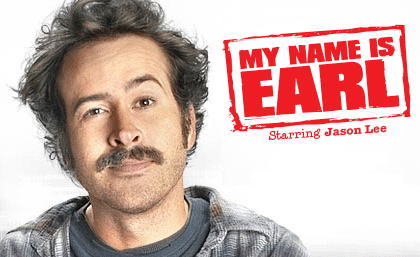
My name is Earl!


".........You know the kind of guy who does nothing but bad things and then wonders why his life sucks. Well, that was me, Every time something good happened to me, something bad was waiting right round the corner. Karma, that’s when I realized that I had to change, so I made a list of everything bad I’ve ever done and one by one I’m gonna make up for all my mistakes, I’m just trying to be a better person. My Name is Earl."
I have posted this because I think it's relevent to the module. Bad behaviour. This series summarises a lot of the bad things we've discussed in lectures. So, when considering 'being bad' and why people do bad things, I think it's valid to mention this!

Saturday, 5 May 2007

Walls (unedited creative piece)

For assignment two of this module I submitted a creative piece on masturbation, using the first line "it always hurt." I wanted to post the full version on here so that any readers could see it in its entirety before I had to shred it of a few hundred words in order to fit the word limit requirements. I think that after having edited many words, it lost a lot of depth and creativity, becoming very shallow and somewhat pointless. The ridiculous word limit of 300 words prevented me from expressing any kind of creativity, as I had to keep everything brief and basic.

Despite the inferior edited version, here is the complete first draft of the segment I chose to expand on. I hope the marker of my assignment can read this and realise what I was trying to achieve.


Walls.

It always hurt. Fools. They’re puttin’ up a wall next door. They build a wall ev’ry year and it just falls down again. The soil can’t hold it or somethin’. Me ma’am says we need it, but I don’t think so. I think it’s pointless. I mean, what does it all mean? What can it all mean? It’s ever since me dad died, and I started gettin’ into books an’ that, that I’ve been thinking about that sort o’ stuff- ya know, like what it’s all about. And it’s every spring they come an’ do this, ev’ry school holidays. So I’m always thinkin’ about it the same time o’ year, about human beings an’ life an’ stuff, real deep things. Like what they do an’ that. Ya know. Thing is, I don’t see why I have to see their stout shoulders pickin’ up boulders all the time. Me ma’am keeps tellin’ me to come away from the window an’ that and do somethin’ useful, but I can’t. Somethin’ makes me watch ‘em for hours. Soon as I hear the cement barrel rollin’ in the mornin’, that’s it, I’m up and I’m there for the whole day. Watchin’ an’ thinkin’. I guess they must think I’m really sad or somethin’ or I’ve got nothin’ to do. They probably think I’m a voyeur, but I’m not. I jus’ like watchin’ that’s all. It makes me think of all sorts o’ things. Ya know, liftin’ up stone after stone when ya know it’s gonna fall down again an’ you’ll be here doin’ the same thing again next year. And ev’ry time I see it, I’m a year older. The builders are huge and really sweaty. There’s two of ‘em. They work like machines. Ya know what really gets me though? They never smile or nothin.’ Their faces are all serious like they’re gonna die if they don’t do it or somethin.’ But they’re faceless. They’re like livin’ in the Stone Age or somethin.’

Walls. They’re funny things aren’t they? I mean, they’re ev’rywhere. In wars, between neighbours, ev’rywhere. It’s even the name o’ that ice-cream isn’t it? I suppose barriers is what I mean. Always tryin’ to stop people from getting’ somewhere. You could be walkin’ to the shops to buy milk or somethin’ an’ then all of a sudden, you’ll come to a dead end. I mean, that’s gotta be a metaphor for life, ain’t it? They shut people away in walls as well don’t they? In prison, they don’t have any o’ this fancy quilted paper you see on the tele, they jus’ have walls- bare walls. An’ that’s it. They must feel like they’re in a box, but no one ever opens the lid an’ lets ‘em out. I mean, it’s like, they put Winston into Room 101 didn’t they? An’ that book about that man Frederick, that walls that ladida Miranda away in that little box room…Oh look, there’s Mr. Briggs from next door, he’s the man who wants the wall puttin’ up in the first place. I think he’s right dim. He’s havin’ a word with one o’ the builders. He’s a fool too. I bet I could teach him a thing or two about the wall- like it’s pointless. I mean, don’t he know about Sisyphus? This guy Sisyphus who’s rollin’ a really big stone up a hill somewhere. He has to do it all the time like, ‘cause it’s his punishment, but least he knows it’s pointless. I wish he could come an’ tell him. He’d probably listen to him. But me m’am says we gotta have it. She says we’ll fight an’ stuff if we don’t. She says that a fence will make us good neighbours. I don’t understand that though. How can they? See, when they build a wall, I can’t play with their dog. An’ I think the dog feels the same way. I know it does, I can feel it, like a sixth sense. I mean, have ya read that real scary story about the black cat that’s buried behind the wall? Walls are jus’ nasty things aren’t they? I don’t understand the point of walls meself… then again, there’s a right moron who works in the grocery store round the corner. His granddad owns the store so he picks up the mess an’ that. But he’s a right cheeky monkey. I’ve seen him pullin’ faces..I wish someone’d wall him in.

Walls though. They’re ev’rywhere. There’s one that divides our brains up even, ya know, a divide. Makes me think that does. Maybe we’re meant to make walls after all. Divisions. Ya know, maybe God made us to put ‘em up. I mean have ya heard that song by The Doors. Me dad used to listen to it all the time. It’s called ‘Break On Through to the Other side.’ It even sounds like it’s about walls. An’ the first lines are, ‘You know the day destroys the night/ night divides the day.’ I mean, that jus’ shows that there are borders in nature too. So maybe there have to be. I mean, night an’ day, the sun an’ moon takin’ turns, ‘cause one of em’s always behind a wall waiting for the other one to come down. That’s why I suppose people like eclipses so much, ‘cause it’s a moment of unity, where the wall is broken. I mean, if there weren’t walls, what would there be? Space? But that’s outside the world, we can’t copy God’s idea can we? So maybe that’s why we have to build walls. You’re either left with space or a grumpy man. That’s what me teacher told me once. I was on this trip an’ me teacher told me that his neighbour put up a new fence in his front garden, but when he woke up the next day, he looked outside the window and it were gone. Someone nicked it. He explained to me how it were ironic an’ stuff, ‘cause a wall is supposed to keep people out but they stole the means, like. We both laughed at it at the time, but it’s not funny really. I mean, I don’t think Sisyphus would laugh at the irony. I really fancied him ya know. He were really clever. But I suppose we had a barrier too didn’t we? I mean, there were the age gap…an’ oh yeah, he was a teacher and I was a pupil. We were on the wrong side o’ the staff room then really, weren’t we? A bit like that Humbert Humbert an’ Lolita. I mean there was a barrier between them, I suppose it were a moral an’ social one. But I mean, that Nabokov were a genius though. It’s in human relationships all the time. I mean, what about Romeo an’ Juliet? They were ‘star-crossed’ lovers weren’t they? I suppose Maurice an’ Clive were too, ya know, in Forster’s book. With homosexuality an’ that. That were a big barrier in them days. He didn’t have it published while he were livin.’ I mean, it’s a right sad book an’ ya realise that it’s all jus’ ‘cause o’ barriers. I mean, there’s this couple that moved in on this street. They’re really young so ev’ryone knows ‘em, ‘cause all the young people usually move out. It’s mostly oldies here. People say it’s gonna be a ghost town or somethin’, but I can’t see any ghosts anywhere. They must be on the other side of the wall. Yeah, so anyway, there’s this couple who are mixed race so ev’ryone talks about them all the time. Ya know about how come he’s with her an’ stuff, an’ how come they got a baby. They treat ‘em different. Like they gotta avoid ‘em or act like it don’t bother ‘em, but I know they’re jus’ pretendin.’ They talk about how it’s an ‘interracial’ marriage an’ stuff, when really they wouldn’t even have heard o’ that word before, let alone try to pronounce it. See, if we didn’t have barriers then nasty things like Racism wouldn’t exist would they? Or Sexism or Sizism, or any isms.

We’re all obsessed with walls, that’s what it is. I mean, what about the North-South divide we all talk about? An’ the Equator? I mean, there’s no real belt that goes round the world, but we’ve made one haven’t we? An’ the Great Wall of China. They say that ya can see that from space, but what’s all the hype about? It’s jus’ a wall. An’ what message is that sending out to alternative life forms if they wanna come an’ see us some day? An’ what about Wall Street??!! Americans are full o’ barriers anyway, aren’t they? I mean, they talk about liberty an’ that, an’ unity, but they’re all jus’ talkin’ about walls really. That’s what they mean.

I mean, they tell ya about walls ever since ya born really don’t they? In school. Ya have to stand behind the wall. I keep tellin’ ma’am that I was born in a wall, ya know, the wall in her womb, but she tells me to be quiet and stop talkin’ rude. But it’s true isn’ it? An’ then ya read books like ‘Through the Barricades’ an’ ‘Roll of Thunder, Hear my Cry.’ I mean, they’re fantastic books but they’re really depressin’. And they’re all about barriers of some sort. Not bein’ accepted for who ya are. An’ we read this poem by Robert Frost about roads. There was one about walls too, but the message were the same. When ya choose one road, ya inevitably rulin’ out the other one. Like when ya buildin’ a wall, ya automatically rulin’ out what’s on the other side. An’ it don’t matter what side o’ the wall you’re on, you’re always walled outta somethin.’

One o’ the builders jus’ dropped a big stone on his foot. Fool.
Bad cinema!


There are so many films I wanted to mention in my essay on bad cinema. It didnt help that the thing had to be 600 words! You can hardly provide a well developed argument in such little space.

Still, had there been an opportunity to mention more films, I would have loved to mention the following:

Mysterious Skin
Straw Dogs
The Devils
C.R.A.Z.Y
L.I.E
Lolita

I'm sure there are many, many more but they escape me at this moment in time!

Farewell!

My essay on Kids

What is ‘good’ about films like Kids (1995)? Discuss with detailed comparison to other examples of Bad Cinema.


“Can a movie be so good that it’s bad for you?” (Anthony Lane, 2002, pg. 57)

Films such as Kids (1995) can be perceived ‘good’ because they are insightful. They are depictions of the issues and situations that people experience in life. Many ‘bad’ films such as Kids and A Clockwork Orange (1971) raise controversy in society because of the topics being dealt with. It is important for the negative aspects of the world and society to be portrayed in one way or another, simply for the reality of it. I think the way bad cinema approaches and conducts its themes and characters is honest and crucial in order to accept and understand what happens in the world. I think it is crucial for films to display “the scathing satire of society’s hypocrisy, corruption and sadism.” (Steven Jay Schneider, 2006, pg. 536) I think there is nothing wrong with illustrating real life horrors on the screen. The messages they are trying to conduct are not to engage in such activities and the consequences otherwise. A Clockwork Orange approaches the controversial and ‘bad’ subject a little differently. The central character is the antagonist with no likeable qualities, yet the audience sympathise with his downfall and fate. We see him undergo a change. It teaches that bad people are capable of redeeming themselves and changing for the better. This helps understanding in terms of people who loathe and categorise such characters as purely evil beings. I think it is important for the world to learn that every individual is capable of redeeming themselves.

The mise-en-scene and film language within Kids displays the horrors of the narrative intelligently. The film consists of handheld camera angles to display the instabilities the kids are experiencing through adolescence. The handheld camera also enhances the realism and documentary effect the director is trying to achieve in order to heighten the shock and controversy.

Funny Games (1997) and Irreversible (2002) are another two good examples of bad cinema. Again, the main character in Funny Games is also the antagonist of the film. Interesting how the central character is an antagonist. I think viewers subconsciously enjoy watching such violent and unforgivable scenes on television purely for the fact that these incidents are actual real life events and take place. The knowledge of it being ‘real’ is what heightens the expectations and interest in the viewers, at least from my perspective. This argument by Steven Jay Schneider (2006, pg 877) carefully illustrates my point. “Michael Haneke pushes viewers to the limit, forcing us to contemplate the senselessness of random violence, as well as our seemingly ceaseless fascination with watching it on-screen.” I think audiences enjoy watching this material because it happens in real life. It is realistic. I do not think Schneider is talking about sadism or snuff movies, but more so about ‘bad’ films becoming a technique of educating oneself and coming to terms with the everyday horrors of life.

Irreversible works similarly. The eight minute rape scene in the underground is horrifying and terribly difficult to watch. The cinematography is used as a technique to enhance the horror to its limits. The still camera focuses in on the rape scene, introducing no cuts, edits or movements. This increases the horror as the audience are forced to sit and watch the scene with an increasing sense of helplessness. Scenes such as these are good because they invite insight and perception into the real world. They also provide awareness and understanding in what takes place around us. They are simply a depiction as to what takes place around us everyday. For that reason alone, bad cinema should not be criticised. They are honest, and that is why they are good.

Friday, 4 May 2007

The last laugh!

What a wonderful picture of good ol' Dustin Hoffman playing the famous (or infamous??) Lenny Bruce. Needless to say that Mr. Hoffman did an excellent job!


This was something I thought to be an interesting topic. Bad comedians. I found the entire 'reactionary' concept particularly interesting. I think comedians that try to reinforce various prejudices through racism, sexism, and other isms are just trying to rationalise controversial topics so they become less of a taboo, so to speak. The superiority theory and incongruity theory use and perpetuate stereotypes. I guess that's what comedy is about. Laughing at other people's misfortunes. Creating humour out of macabre or unfortunate situations and incidents. It all seems pretty acceptable to me. It is a 'joke' afterall.

I think Russell Brand fits the criteria as an example of a contemporary 'bad' comedian. There are very few, if any, jokes made by him that do not include his genitalia or masturbation. *yawn-a-rama*

I think people such as Ben Elton deserve the 'comedian' status! Sit-com's I consider to relate to the whole 'being bad' subject are Bottom and The League of Gentleman! I think the League of Gentleman is pure class though. Very dark, sinister and intelligent. Bottom is hilarious and a classic too of course.

Random thoughts there!

Betrayal

I feel particularly passionate about this topic, because I have been betrayed for as long as I can remember. Yes, I have been betrayed more times than you, reader, have had hot dinners. Betrayal. It's a funny old game. I cannot really think of a single incident in which I have betrayed another, interestingly. Perhaps it is those who are sincere and honest that always end up getting hurt. Perhaps sincerity and honesty are the two requirements for a victim of betrayal. Hmmm, does that sentence even make sense? I think you know what I mean anyway. Betrayal really is an interesting concept. I remember, I felt betrayed for a good year or two when my sister commit suicide. The anger overshadowed the despair.

I guess the film 'Ordinary People' is about betrayal and conquerring any feelings of resent towards the betrayer. Primarily it is about strange relationships and a death to cause a family to fall apart - but I think the underlying message in the film is the mother's journey of acceptence and forgiveness after feeling betrayed and cheated.

Delicate subject. It probably has nothing to do with module, but it feels good to have released it nonetheless. Hope I'm not going to get penalised for it!

Win some, lose some.


I didn't find this subject to be too stimulating. Gambling - so what?! Okay, I realise it is a form of 'being bad' because it's addictive and many hardcore gamblers end up losing their minds as well as everything else... but I just didn't relate to it. I mean, I've never done the lottery, I couldn't care less. Everything just seems to be a scheme in order for the government to make more money (out of our misfortunes might I add!) - so I just try not to give them the satisfaction. I don't even have any interest. The only thing I've done that I can remember, that remotely relate to gambling - is eBaying. I wouldn't really call eBaying gambling though, because nothing is at stake. Well, except the item... but you don't lose anything!

Having said that... I do like hanging around in casino's because, well, they're just so pretty! I mean, the attraction is a scheme in itself. They're covered in flashy lights and have music blasting out of them as if to lure vulnerable individuals down a one-way road to bankruptcy.... with no turning back!

And that's all I have to say on the subject! I much preferred Josie's evaluation on the suject though. Seems more straight to the point. Applause for Josie.

Tuesday, 1 May 2007

Being too religious....


I don't consider myself a religious person. When the lecture began, I felt excluded more than anything else. I don't have a problem with people practising any kind of religion, but personally, I prefer to remain silent on the subject. As I've grown older, I've realised that I must need a journey of self discovery, or some sort. I need to find myself. I've just become so confused about who I am and what I believe - that any grain of faith seems too far to reach. Lately I've been thinking about faith a lot, and how much I actually have. As the days go by it seems to distance itself from me further and further, until it becomes but a speck in the distance. I've had many bad experiences and events in my life that I believe are the cause of my little faith left in anything. I think religion and faith is something a person must decide on individually and with their own determination and beliefs... not what they have been taught to believe. It's all about sincerity, and meaning at the end of the day. I think it is anyway. As I said, I'm unsure of anything related to the subject. I tend to steer clear on in depth discussion about religions.

Tom's view on the subject matches mine. Additonally, I think that a group of overtly religious people combined can lead to danger. Spirituality for the individual must be good, however.

Liar Liar


We all do it at some point. Except perhaps Christopher Boone, the narrator of "The Curious Incident of the Dog in the Night-time", who suffers from Aspeger's Syndrome. As the link and the book explains, Asperger's syndrome includes the inability to lie. He is loyal and does not break promises. However, he understands the notion of 'white lies', which he defines as not being dishonest but not being the complete truth either. In other words he is honest without the minor details that can be considered dishonest. Christopher Boone cannot understand metaphors as part of his disorder, and considers them to be lies. Great book - get hold of it if you haven't read it already!
I think lying and being dishonest are two seperate things. I associate lying to be more deceitful, vindictive and cunning... whereas I consider dishonesty with telling a lie for a good cause, such as the protection of a dear one.
I particularly liked this person's views on lying to gain status . It's quite true. Many people think that making up stories in order to look better really does give you more reason to exist, but a the end of the day it really does seem pointless as it doesn't make it true.

Monday, 30 April 2007

Infidelity


Infidelity has been used so much in cinema, literature and other artistic forms. Infidelity is a very common topic within the media. Books such as "Madame Bovary" and "The Unbearable Lightness of Being". Films include 'Closer' and 'Unfaithful'. All of these examples suggest that infidelity can be used as a central theme within literature and theatre.
I believe that the definition of infidelity is having sexual intercourse with someone other than your partner. I do not consider flirting an act of unfaithfulness. A passionate kiss however does cross the boundaries of infidelity. I think people consider those who interact and connect with someone of the opposite sex other than their partner on an intimate level leads to threat of loyalty. I think it is incredibly important for each person to continue with their own independent social life, as feelings of claustrophobia and entrapment could emerge if otherwise - most likely leading to infidelity as an inevitability.
Here is someone else's view on infidelity. It explores the activity we underwent during the lecture, which included our own, anonymous experiences in terms of infidelity.

Modification of appearance


Interesting how we all modify our bodies. I think most people modify their bodies for aesthetic reasons rather than religious. Additional reasons that may persuade one to get a tattoo may be as forms of fashion or as a rebellious act. We do happen to live in a society obsessed with appearance. I think many people get tattoos as a technique of self inflicted pain in order to state who they are as an individual. I, personally, think that one should think carefully and thoroughly before getting a tattoo. It is something that will stay with you for the remainder of reality afterall. However, it is fashionable and people may want to state something in the process, such as their love for one or who they happen to be. Johnny Depp is a good example - who has his mother's name tattoed on his arm).

I have many piercings, and I consider them to be stylish. The whereabouts however, are a different matter. I think most places in which people get piercings are acceptable and attractive, but genitalia piercings are completely uncalled for! I should think the majority of piercings people get are for attraction and sexual reasons, such as nipple, genital and tongue piercings.

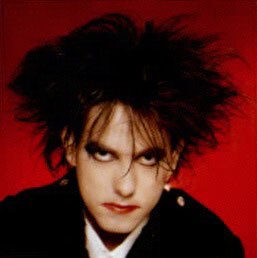
Make-up application is considered a form of body modification also, which is applied again for heighened attraction. Some people may apply make-up as a form of appreciation or indication of their personality or style, aka sub-cultures. When I say that some people may apply make-up or alter their appearance to fit a person they deeply respect as a form of appreciation, I am referring to those who idolise certain figures such as Tim Burton or Robert Smith (lead singer of The Cure) Both Tim Burton and Robert Smith have gothic influences. People where make-up for different reasons. Interestingly, Robert Smith once quoted that says to wear make-up is to make himself feel more comfortable. It's an image, a persona. It's like a mask.

Friday, 27 April 2007

To smoke, or not to smoke...?


Smoking. It's such a common habit. I personally do not smoke, but I have experienced the peer pressure that most of us undergo. It is all about image I suppose. I read somewhere that statistics show that more women smoke than men. I'm not sure if that's shocking really. I think its all linked with stress somewhat. Women undergo a lot of physical pains and need to take things like pregnancy and motherhood into account.

This very interesting website shows differences between men and women in terms of smoking habits. It discusses that married or cohabiting couples are less likely to smoke than others. I think that is interesting. Perhaps at that point people realise that there is more to life and to start living rather than... well, going backwards. Speaking of 'preaching' - there is a scene in the beginning of Clerks, a film directed by Kevin Smith) in which a customer preaches to all the oter of smoking. His hilarious approach to this includes taking a cancer ridden lung out of his bag and urging customers to chew gum instead. It's really quite funny, expecially when we find that he is in fact a chewing gum representative.

Bandits and Anti-heroes


I thought this particular topic considered the concept of the 'anti-hero'. Having discussed characters such as Robin Hood - the 'noble' thief who robs from the rich in order to provide the poor. In my opinion, Robin Hood is an anti-hero. It can be confusing trying to distinguish an anti-hero. When doing so, I take one thing into account. As discussed in lecture, 'when are the bad guys the good guys?' So, in other words, in what context can villains become heroic figures? Does the villain/bad guy have at least a moment of redemption? Do they undergo a small space of time in which they are able to redeem themselves. Are they able to evoke sympathy from the spectators? Is there danger of glamourising ciminal or bad behaviour? These factors are ones to consider when pondering on anti-heroes. Anti heroes are protagonist's with antagonistic values.

Anti-heroes I can think of within cinema are for example Darth Vador and The Terminator. The Terminator is a peculiar one. I consider him an anti-hero because where he is a terminator in the first part, he becomes a protector in the sequal. This alters the audience perception of bad and good, and the two versus each other.

The link above provides a detailed plot summary for Terminator 2 - for those of you (I presume very few!!) who are not familiar with it.


I think that a classic anti-hero is the one and only, Patrick Bateman of American Psycho.


Thursday, 15 February 2007

Field Trip

I think a trip to Amsterdam should be arranged for serious study purposes!